


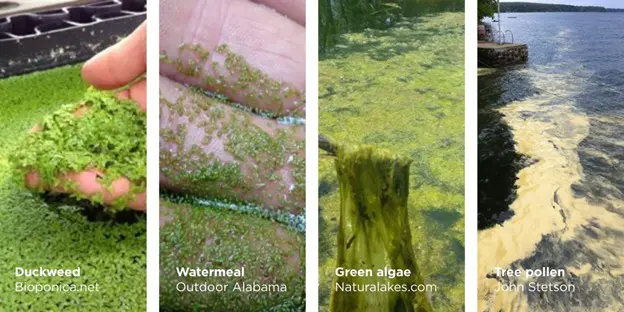
Cyanobacteria blooms (also referred to as Harmful Algal Blooms) have become a growing problem within the Thunder Bay District affecting many inland freshwater lakes. Cyanobacteria, also referred to as blue-green algae, are microscopic plant-like organisms that are naturally found within streams, rivers, and lakes. Blooms occur when the populations rise rapidly, creating a large floating mass that can be bluish-green, brown, red, or yellow in color.
Exposure to cyanotoxins during recreational activity can result in hay fever-like symptoms, skin rashes, respiratory issues, and gastrointestinal distress. Not all toxins are present in a cyanobacteria bloom, only lab testing can determine the toxin present and the amount. In order to determine what toxins are present, a sample must be collected by the Ministry of Environment, Conservation, and Parks to be analyzed in the Ministry’s lab.
Suspect a Blue-Green Algae Bloom?
Step 1: Document the date, time and location of the suspect blue-green algae bloom.
Step 2: Take Pictures! Closeup photos, broad view photos, and try to capture the extent of the bloom.
Step 3: Take Notes! Write down a description of the bloom, general comments, and observations.
Step 4: Steer clear from the water and prevent family, pets, and livestock from swimming, playing or drinking the water.
Step 5: Report findings
Report to Ontario Bloom Reporting:
Report findings to the Spills Action Centre:
- Toll Free: 1-800-268-6060
- (416) 325-3000
If found on LRCA property:
To avoid exposure to cyanobacteria, it is recommended that:
- When in doubt, keep out! If algae bloom is observed, assume toxins are present in the water and restrict family and pets from accessing water.
- Do not drink water that is suspected of cyanobacteria contamination. Conventional water treatment and boiling are not effective methods for removing cyanobacterial toxins from the water.
- Avoid swimming, bathing, or other recreational activities within the suspect water when there is a presence of foam, scum, or mats of algae on the water’s surface.
- Refrain from eating fish at locations where cyanobacteria may be present. Cyanobacterial toxins are not inactivated by cooking the fish. Avoid consumption.
- If in contact with suspect water, immediately rinse off with fresh water and monitor for symptoms.
The LRCA is taking progressive steps to further understand and analyze cyanobacteria within Select Conservation Areas and the Lakehead Watershed. Baseline data will be collected to determine the dominant genus of algae and characterize the trends within the water bodies throughout the year. All identified blooms are reported to the Ministry of the Environment, Conservation, and Parks (MECP) and the Thunder Bay District Health Unit (TBDHU). Confirmed exceedances may result in a beach closure as directed by the MECP or TBDHU. Any swimming advisories or beach closures will be posted on the LRCA’s website and social media platforms and signage will be displayed at the site.